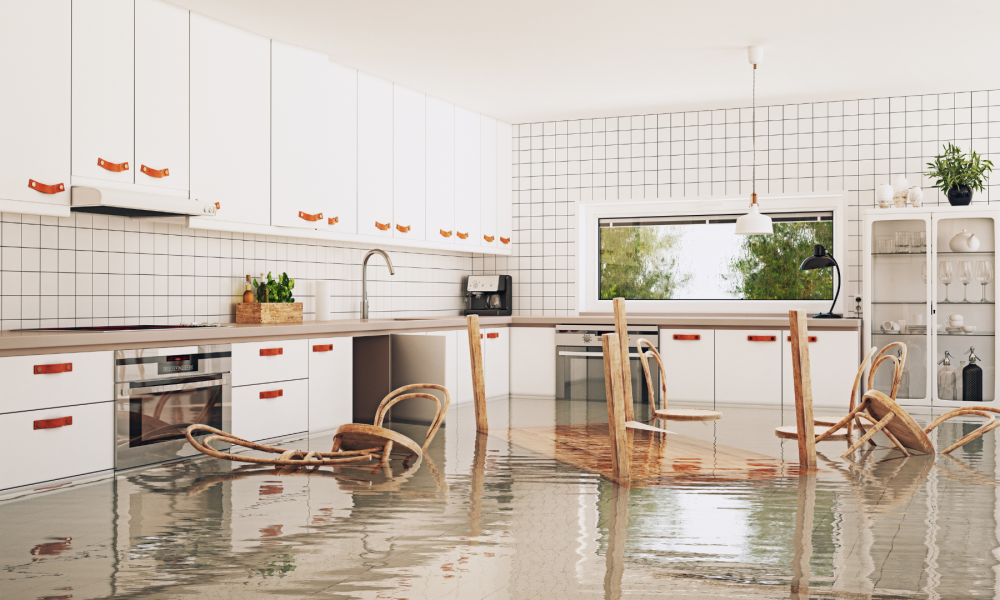
As storms become more frequent and severe, more areas once considered safe from flooding are now exposed.
Many homeowners, condo owners and renters in an area that’s considered low risk by the Federal Emergency Management Agency may not have flood insurance. However, if a residence floods, standard homeowner’s, condo owner’s or renter’s insurance will not cover the damage because flooding is specifically excluded from coverage.
As more areas outside FEMA-designated flood zones experience flooding, residents must consider their risk. Fortunately, there is a simple solution: purchasing a flood insurance policy, which can be relatively inexpensive in areas not designated as flood zones.
No coverage
Homeowner’s, condo owner’s and renter’s insurance will typically cover some types of water damage, such as damage caused by a burst pipe or a roof or window leak. After such events, the policy may cover repair and replacement costs for damaged items like furniture and electronics, up to policy limits.
However, if the damage is caused by flooding due to storms or ocean surges, you will need a flood insurance policy to cover repairing the damage.
The typical policy defines flood damage as that caused by an overflow of inland or tidal waters. It’s defined as a general and temporary condition in which two or more acres of normally dry land or two or more properties are partially or completely inundated. Seepage through the basement will or ____ that comes up through the floor (hydrostatic pressure) is also covered under flood insurance.
Water damage affecting only one property may not meet the policy’s definition of flood damage.
Types of flood coverage
If you have a mortgage on a home or condo in an area designated as a flood zone by FEMA, the lender likely required you to purchase flood insurance in addition to your property insurance policy. You can still purchase flood insurance if you live outside a flood zone and will likely qualify for lower rates.
Most homeowners purchase flood insurance through the National Flood Insurance Program, which is run by FEMA. There are private insurers in the market, but not many.
The NFIP’s Dwelling Form offers two types of coverage, both of which FEMA encourages homeowners in flood zones to purchase:
- Building property, up to $250,000, and
- Personal property (contents), up to $100,000.
Private flood policies allow you to purchase more coverage
Policies cover direct physical damage to insured property based on its replacement cost or actual cash value, up to the policy’s liability limit, whichever amount is lower.
The takeaway
Even if you don’t live in a floodplain, if you do live in an area experiencing stronger storms or more severe storm surges, give us a call.