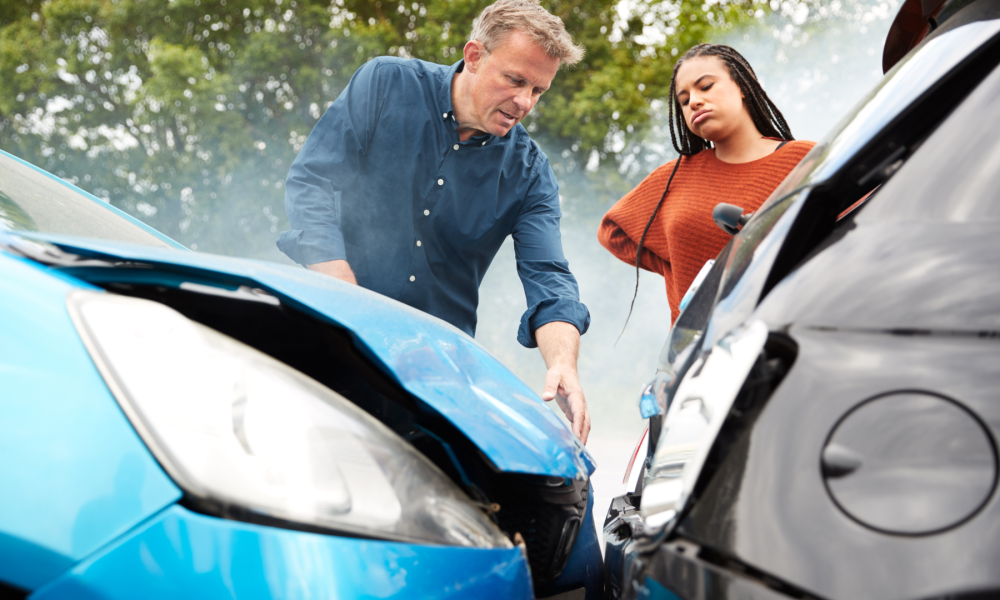
Determining who is legally responsible in an auto accident requires identifying who the negligent party is.
In most cases, common sense can be used to determine fault, but often drivers do not know exactly which laws were broken by the at-fault party. This makes it more difficult to prove a case to an insurer when making a claim.
There are a few places to look for this supportive information.
Police reports
If you or the other party called the police or 911 after the accident to report injuries, there will be a police report.
If that’s the case, you can contact your local law enforcement traffic division to ask for a copy of the report.
Many police reports contain a responding officer’s opinion about who was at fault. If one party clearly violated any laws, the officer will write that in the report.
Typically, any mention of the other party breaking traffic laws will be enough to sway your insurer that you were not at fault.
Hit in Rear
In some accidents, the other driver is almost always considered at fault.
For example, if another motorist hits the back of your car, the insurance company will typically consider them at fault because it is most likely they were either following too closely or failed to react in time when you put on your brakes.
One of the basic rules of the road in every state is that a driver should follow a vehicle ahead at a safe enough distance to be able to stop even if the other person brakes suddenly.
Also, damage is easy to prove with a rear-end accident. One driver’s vehicle will be damaged on the front end, and the other driver’s vehicle will have damage to the rear.
That said, for drivers who are rear-ended, there are still a few situations where their carelessness is a contributing factor to the accident.
If the insurance company investigates the claim and finds that your brake lights were out, this could reduce the amount of compensation you receive and you could be considered at fault.
Your compensation may also be reduced if you ignored mechanical issues that should have been fixed and were a contributing factor to the accident.
Left Hand Turns
Anyone who makes a left turn and is struck by a vehicle on the other side of the road that is going straight in the opposite direction is an at-fault driver unless:
- They were making the left turn at a green turn light.
- They were at a four-way stop and had the right of way.
- The oncoming vehicle was greatly exceeding the speed limit, which made it difficult for you to judge how fast they were coming towards you.
Also, the turning driver will have damage on the side of the vehicle, and the oncoming vehicle will have damage to the front end or the side if the turning driver tried to swerve.